My First PyCon US
This story starts on the Day 11(March 14, 2026) of vipassana. After 10 days of no phone, no eye contact, no talking, I walked to the office to collect my belongings. I didn’t want my phone back, I didn’t wanna connect back with the world. But I am glad I did. Turned on my phone. Whatsapp crowded to 39 emails, ignored it all. Opened email and there it was
My PyCon US tutorial proposal was selected. I stood outside that vipassana center jumping. After ten days of silence — that was the first thing the world said to me. “You are going to PyCon US”. Not yet.
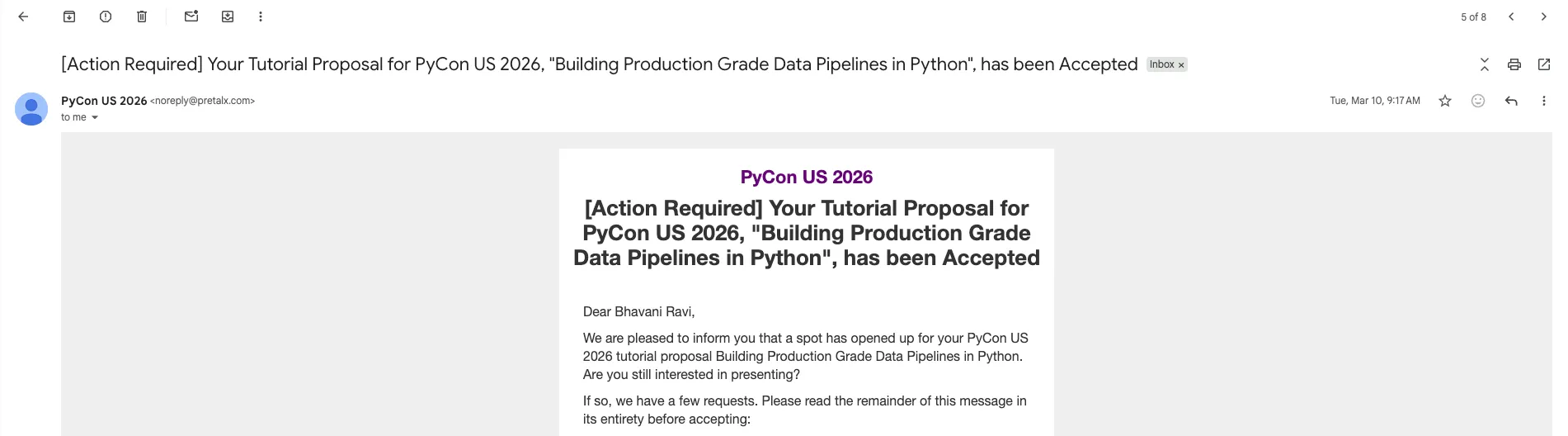
The 48 hr acceptance window had elapsed. I cursed myself for going on the retreat. Maybe I will get it, maybe I will not. Maybe all the slots were taken. I wrote an email immediately explaining my situation. The weeks that came after was hell. I had a back and forth with the tutorials team at Pycon, confirming that I already have a visa, they just had to say the word and I will get ready to fly and teach. They did. March 24, 2026, Yes, I am going to be presenting at PyCon US, officially.
I’ve been part of the Python community since 2018 — attending PyCon India regularly, encouraging others to go to conferences, volunteering, speaking. But PyCon US was always the big one. The one I watched from afar.
PyCon US 2026 was at the Long Beach Convention Center. I flew in, hopped metros, slightly scared of the new city. I checked into my Airbnb — a cozy studio apartment, right across the beach, with every amenity possible.
The first day I had to myself: explore a little, review my workshop materials, shake off the jet lag. Worked on polishing my workshop content one last time, before hitting the bed. The following day I would be presenting it.
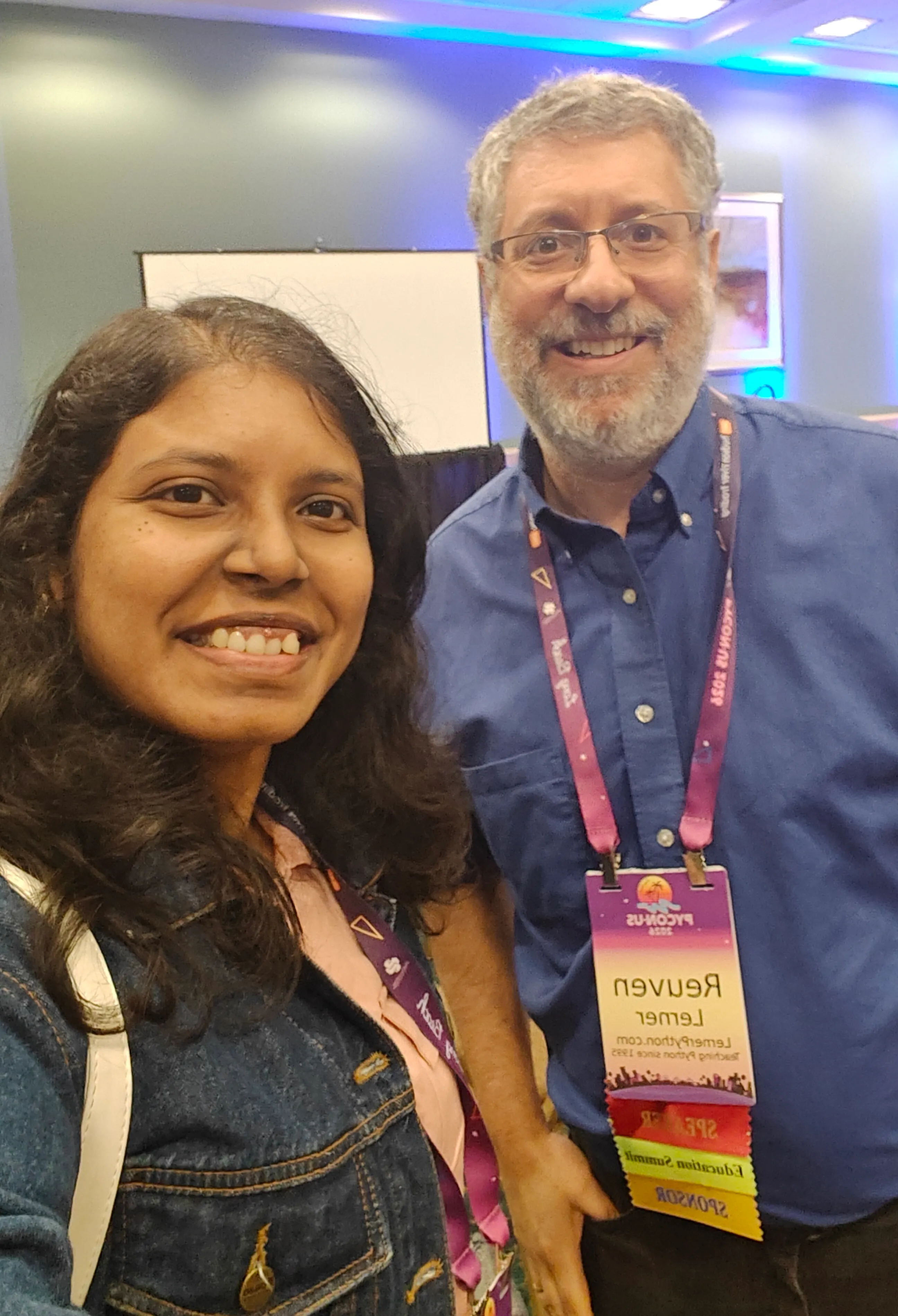
There is some amount of comfort in having your session on the 1st day of the conference. You can completely chill and socialize the rest of the time. I walked to the venue. Long beach convention center is a huge complex, with multiple entrances. I checked in, got my badge, found the speaker room. I was just talking and introducing myself and then Reuven Lerner walked in. My heart started beating faster. I’ve been watching his Python content for years. I went up, said hi, and introduced myself and how big of a fan I am. That was the moment it became real. I’m at PyCon US for real.
The tutorial
My workshop was on “Production-Grade Data Pipelines with Apache Airflow” built around a real-world story: a bookshop’s sales data flowing through a pipeline, capturing errors, handling edge cases. As I entered the room there were people already there with laptops loaded up with the course’s repository. What surprised me: the audience came prepared. Usually about 50% of workshop attendees don’t look at the pre-read materials. This group had. That motivated me to give them more. I run workshops in a learner-led model, concept intro, then hands-on exercises, then I circulate and nudge. It gives learners the power to be their own guide. They still get your full expertise, but they don’t feel talked at. They make mistakes, get over them, help each other.
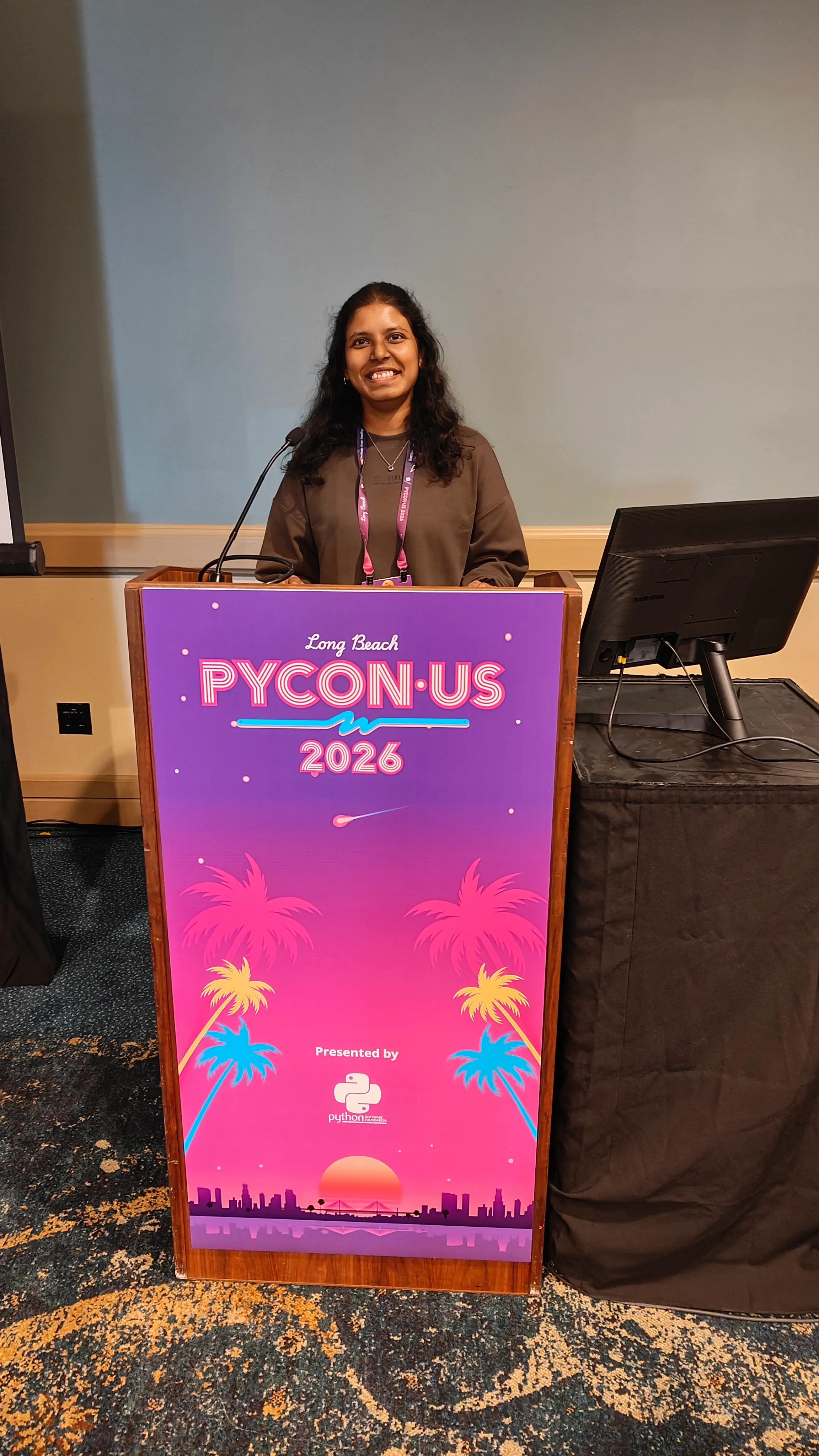
I didn’t hear direct feedback in the room. But a few days later, someone told me their colleague had attended my workshop and raved about it. That secondhand validation hit harder than any in-person compliment would have.
Education Summit
The day 2 was also a tutorial day, but I had something else planned for myself. The education summit - A place where educators of Python come together to share their ideas around teaching. Given that I have been slowly, deliberately embracing the teacher part of me. It’s not just something I do on the side anymore, it’s central to how I think about my work.
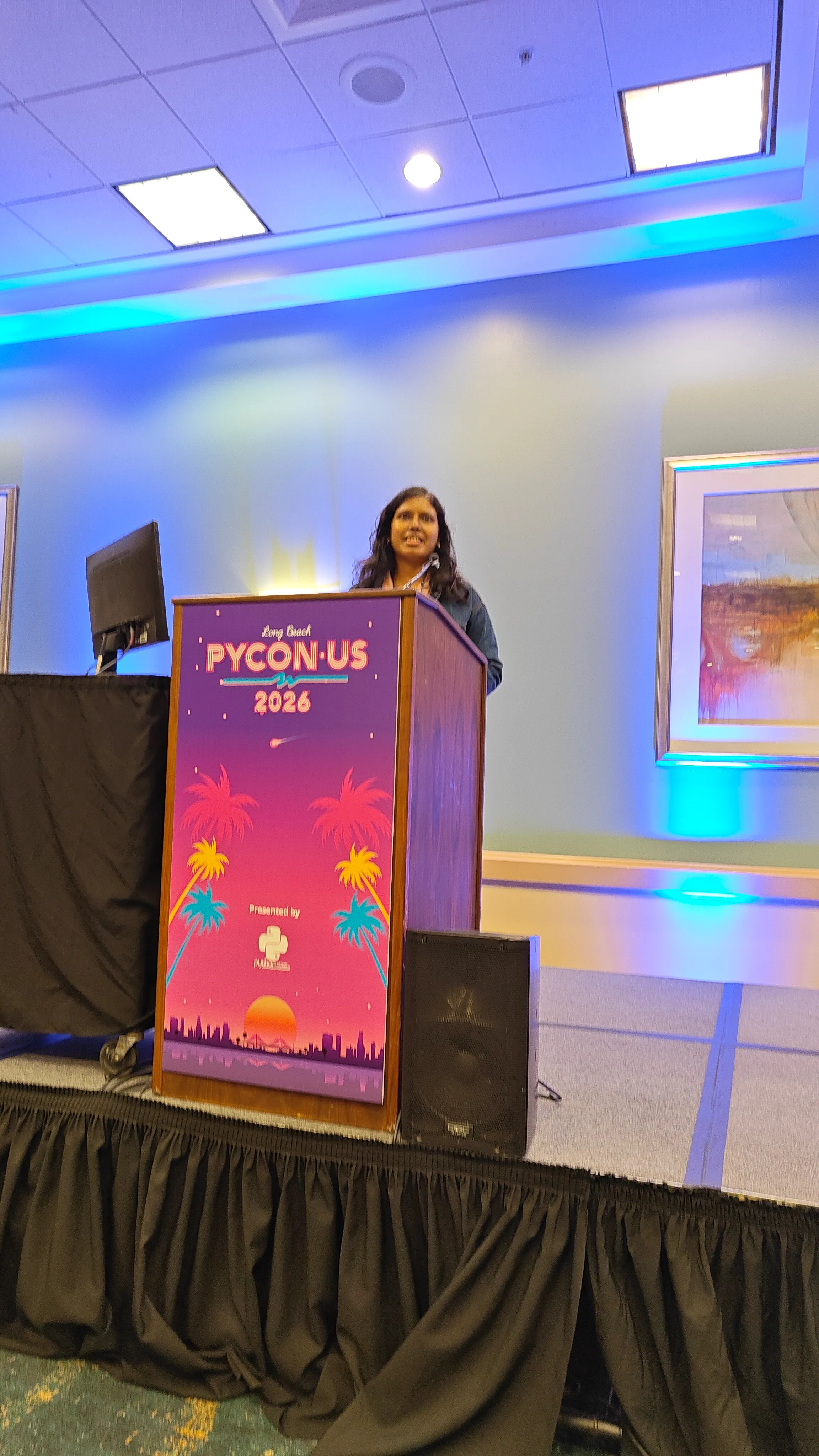
So of course I went to the Education Summit. Listening to other educators talk about pedagogy, curriculum design, AI in classrooms moved me, it felt like I was in the right room. Kelly Paredes co-host of teaching python podcast was the host for the day. She was super kind and encouraged everyone to sign up for a lightning talk, and I did. “AI gives educators an existential crisis here is why I have hope”. My answer to that crisis came from three stories — curious people who always go one level deeper. They don’t just consume, they question. They don’t just learn, they want to understand why. These curious kind are the 10% of the masses. There will always be people to share the knowledge they gain. So, as long as curious people exist, there will be people who want to share knowledge. As long as sharers exist, learners will exist and teachers and teaching won’t expire. Hence proved
The PyLadies booth
That evening I was tasked with something important. To take care of the Pyladies booth. The booth ran all three conference days — outreach, talking about the PyLadies community, selling keychains and jewelry to raise funds. I volunteered for two slots. This was the best part of my conference. Just standing there opened doors to meet so many cool people. To see fellow women in tech and their allies stop by enquire, be excited and support the cause was heart warming.
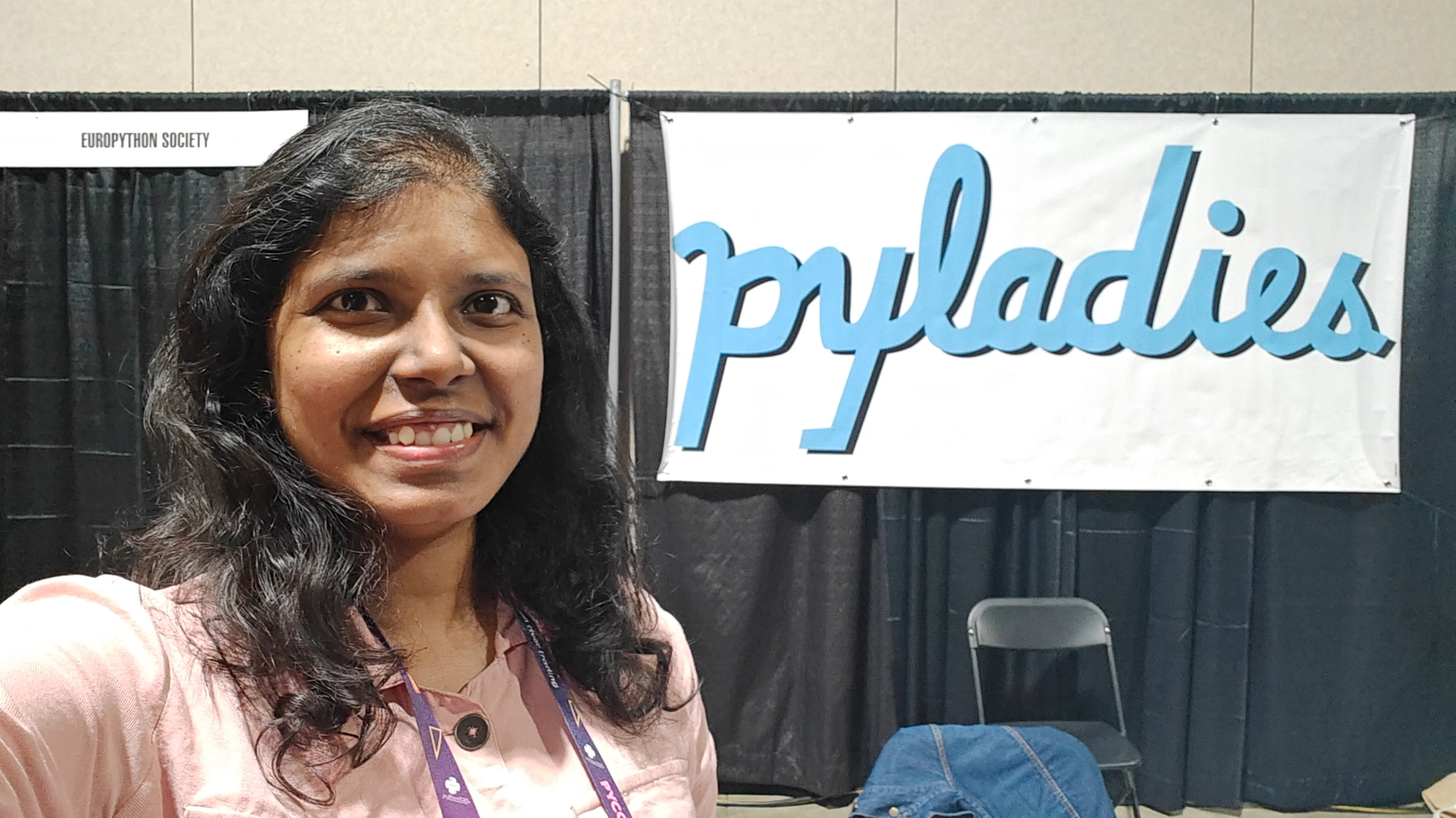
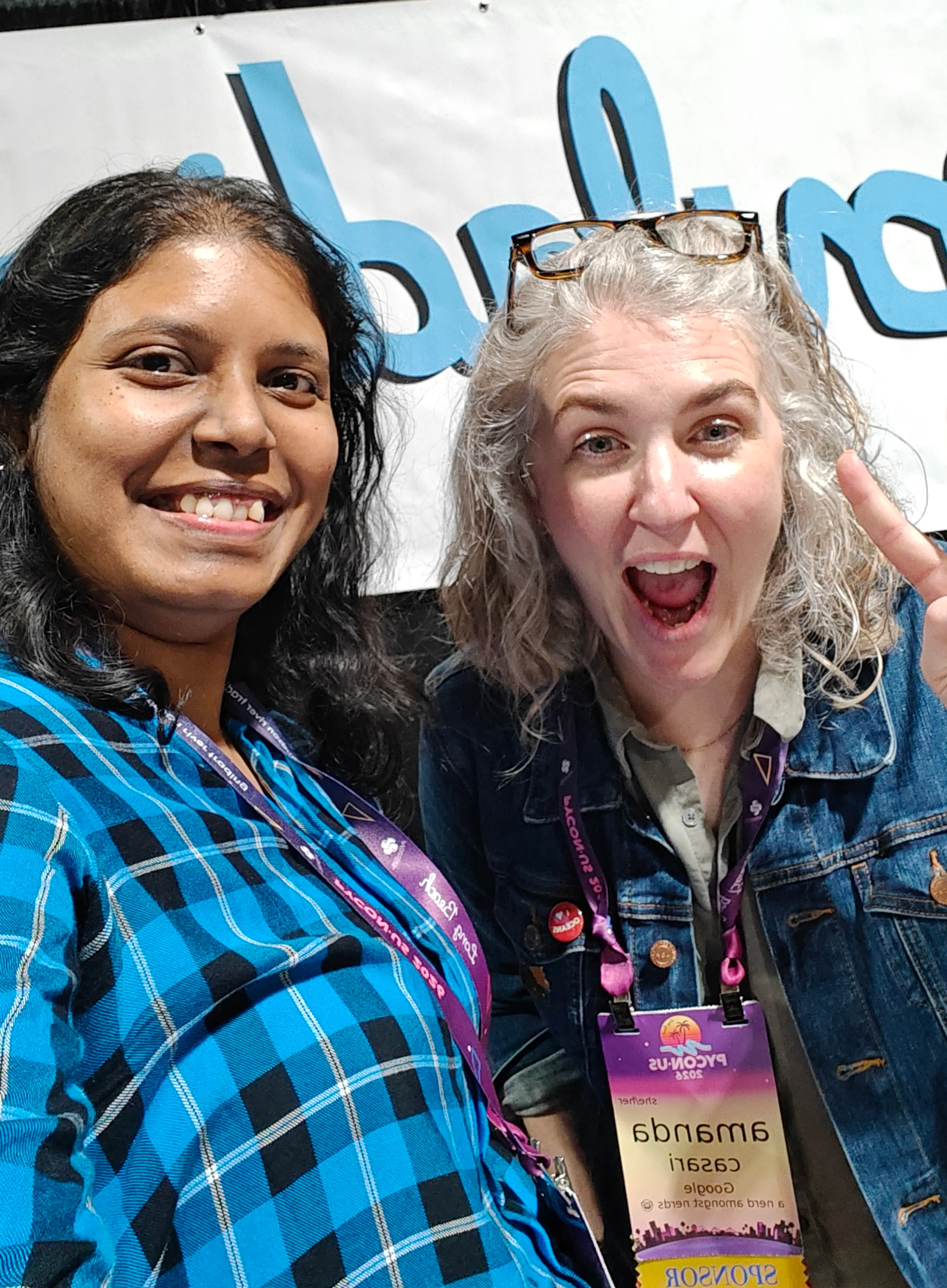
I met Amanda Casari from Google there. She is going to do something kickass later, keep reading.
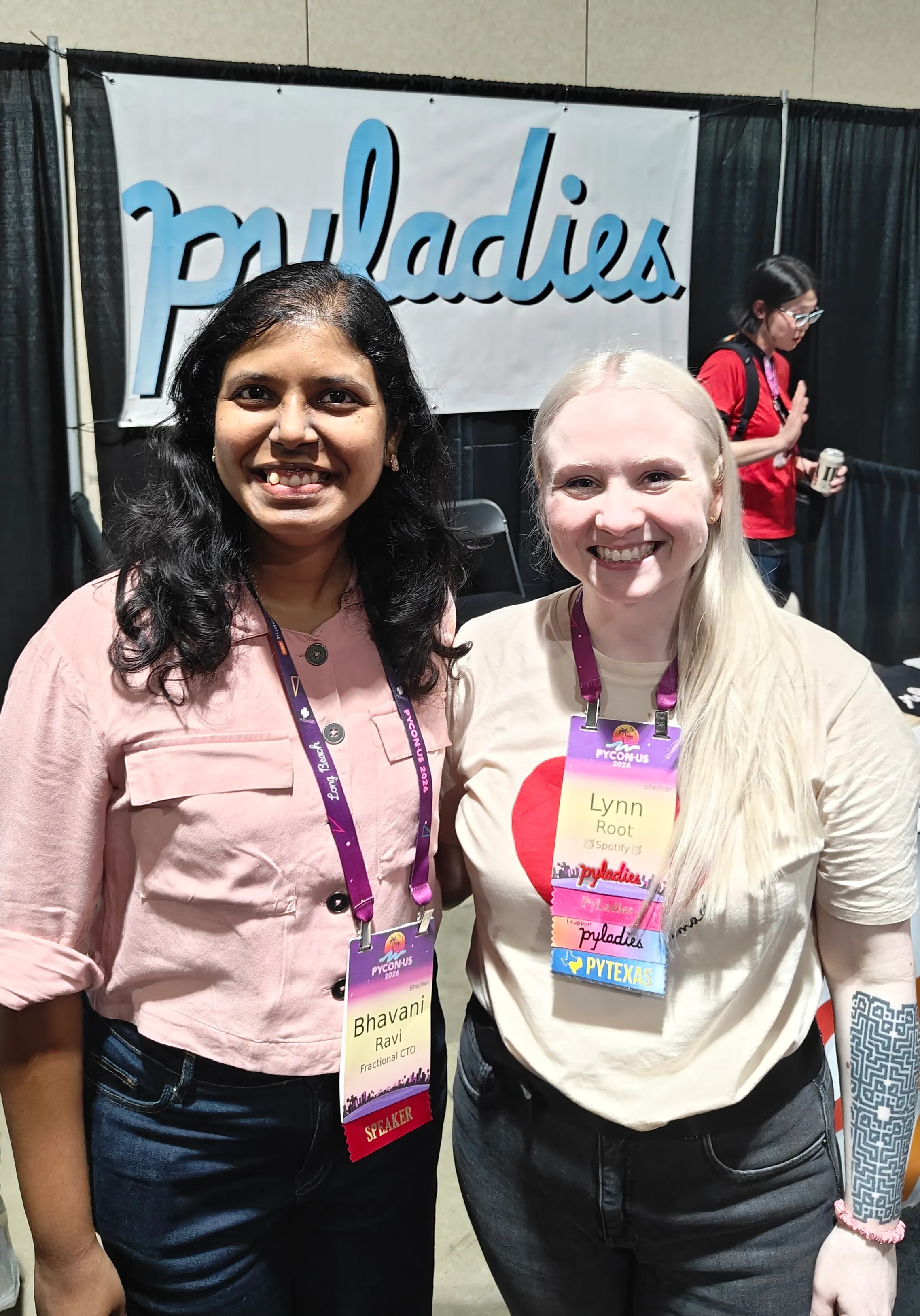
Also met Lynn Root who leads Pyladies now, she was the most energetic person, we shared ideas on future of Pyladies, ground realities of running a community. Maria Jose Molina Contreras shared her views of how she is juggling multiple PyLadies initiatives beyond the geographic limitations
I also attended the PyLadies lunch. First time seeing what PyLadies looks like on the ground in the U.S. Different scale, same energy.
I also got to talk to Deb Nicholson, Executive Director of PSF, about where the community is heading. She talked about what it means to have an independent non-profit not backed by any single company — what that independence actually protects in the open source ecosystem. I’d thought about it abstractly before. Hearing her frame it made it concrete.
Keynotes
Remember Amanda from the Pyladies booth? she gave one of the best keynotes of the conference. It was centered around hope, how even with AI, it’s humans solving the hard problems. By the end of it, I had goosebumps. The auditorium gave her talk a standing ovation
The other keynote that stayed with me was by Rachell Calhoun and Tim Schilling — the co-founders of Djangonaut Space. It was about the power of community: what two people’s simple idea can bring to an open source project. How a free 8-week mentorship program became something that changed who gets to contribute to Django. The model works. And the question they left everyone with — how do you extend this to other communities — is one I haven’t stopped thinking about.
Open Spaces
After the keynote and couple of talks, I was sure to explore the unrecorded spaces of the Pycon, Open spaces. Where great minds get together chat about a topic and leave the table taking something. My favorite ones were:
Civic Data & AI
We discussed the gaps in public data, where is the line of ethics in automating a bunch and making people lose jobs, is it even feasible to automate
Open Source Contributions in the age of AI agent
I had a lot to share on this, based on my open source journey, how to approach it as a user rather than a contributor. Tim Schilling from Djangonaut right next to me, he was sharing the miseries of how AI has made the life of maintainers an absolute nightmare. We discussed things like future of open-source, how can we swim through the pile of new open source projects coming out everyday.
Beyond GitHub
I was particularly interested in this one because I didn’t know people wanted to get rid of Github altogether. That alone got me curious. In the open space we discussed the current age limitations and alternatives.
PSF Board
This one was rather special because right after I probed Deb Nicholson about the work that PSF does, she invited me to get a closer look at this Open space. This was the most packed open space. To see curious people giving suggestions on what the future of Python community should look like was so heart warming.
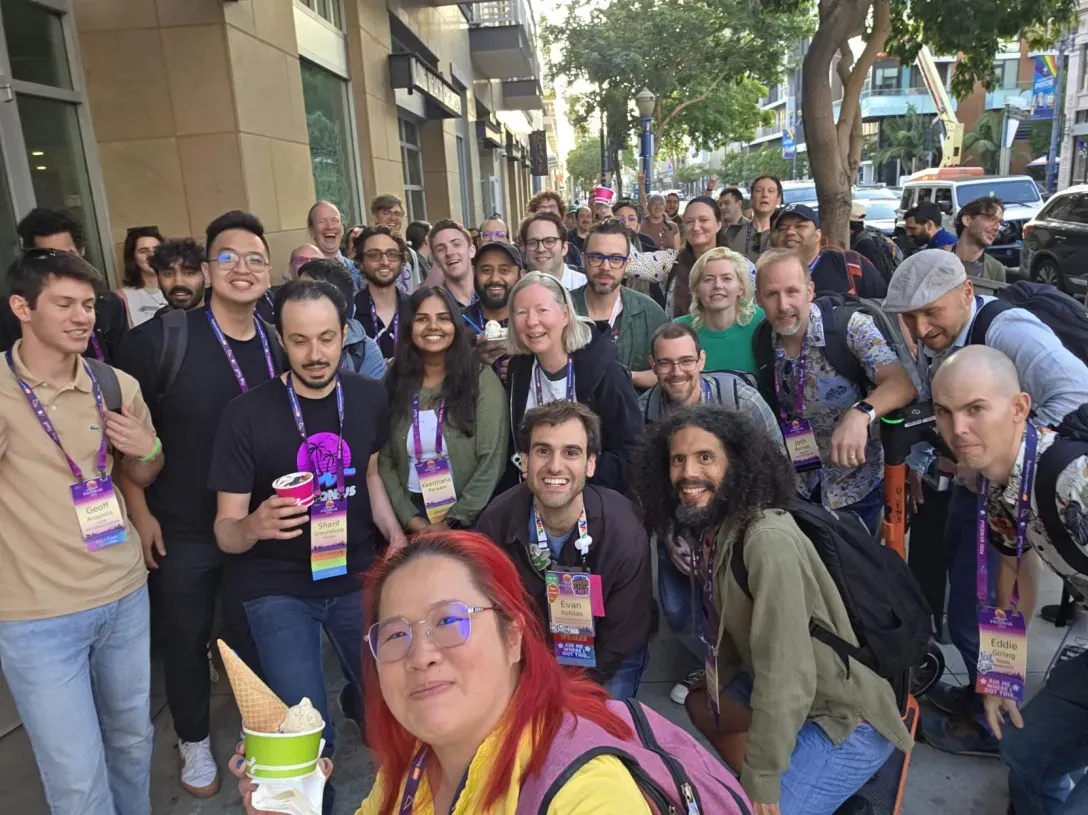
Ice Cream Selfie Flash Mob with Mariatta
The people
There’s a thing that happens when you meet people you’ve admired from a distance. They either shrink or they expand. Almost everyone I met at PyCon expanded.
Trey Hunner. Educator, Python teacher, someone whose approach like Reuven I’ve looked up to for years.
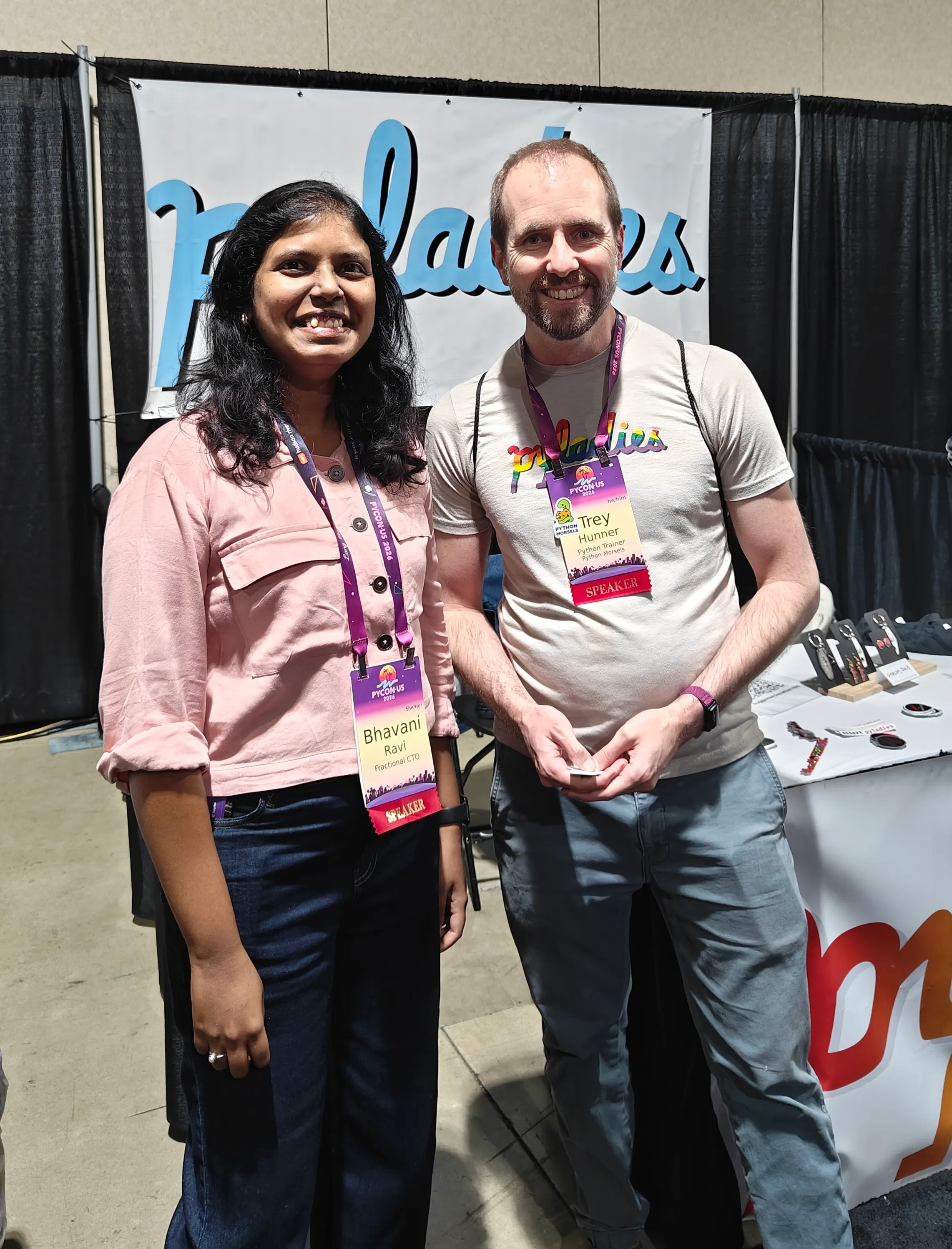
The thing about Trey and Reuven: they didn’t switch lanes the moment the AI train hit. They didn’t panic, didn’t pivot. They embraced it gracefully, stood their ground, shared their expertise, and used AI as an accelerator. That’s not easy to do when everyone around you is either screaming doom or chasing hype.
Marcelo Trylesinski — Pydantic core team, FastAPI expert, someone I once cold-messaged on LinkedIn because I wanted to work with him.
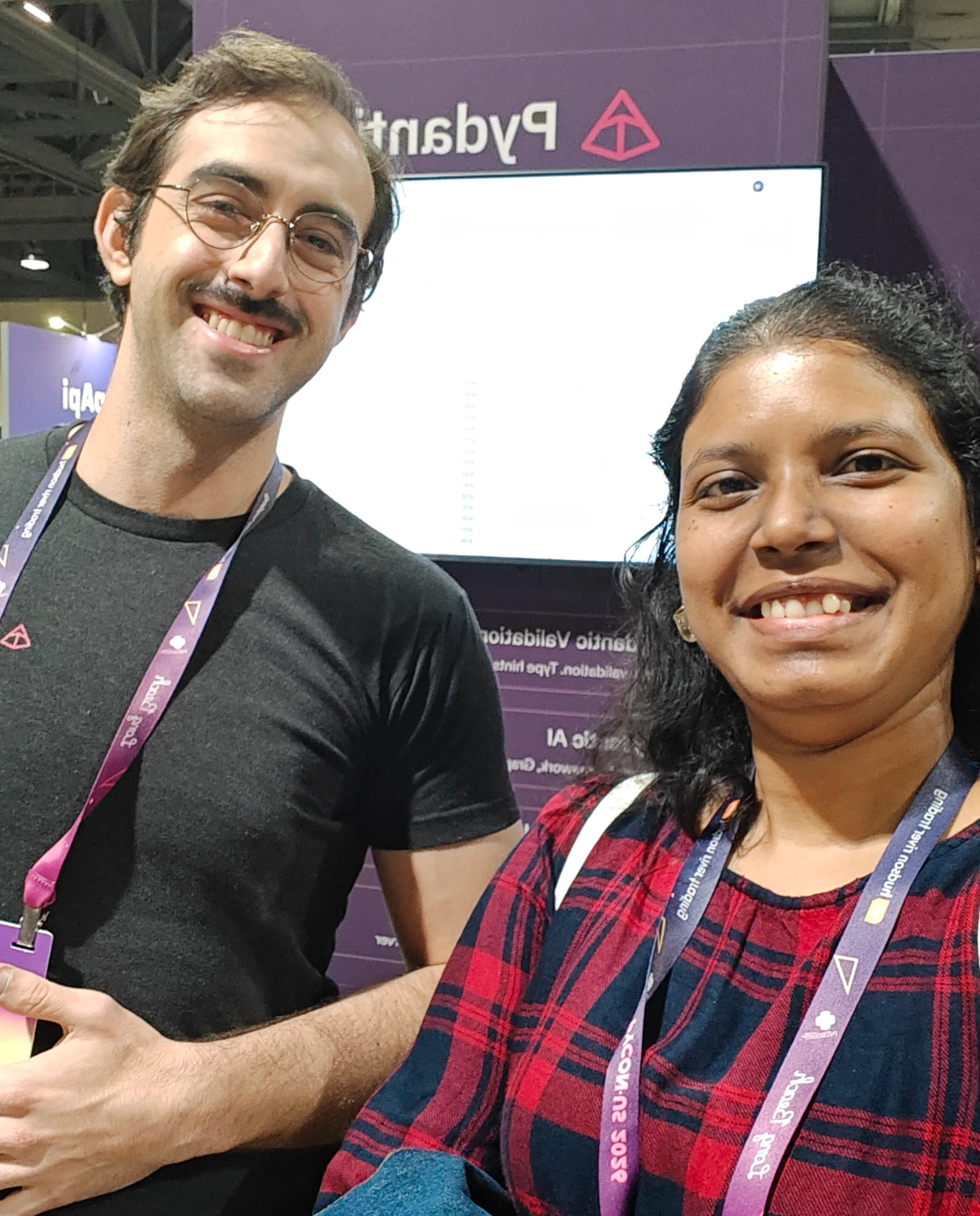
Meeting him in person was surreal. Those LinkedIn messages feel very different when you’re standing next to the person.
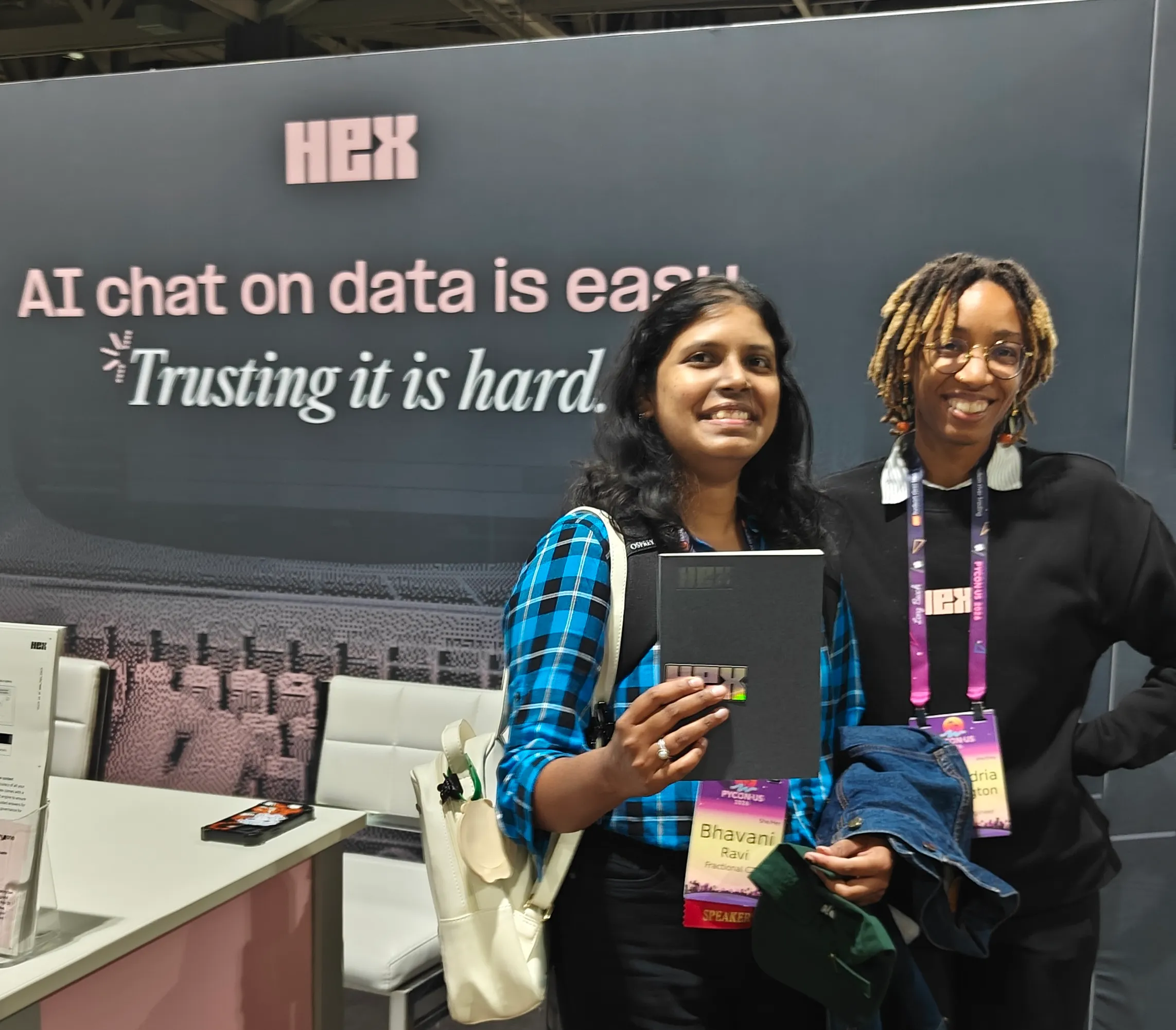
I’m also a big fan of the Hex team — got to spend some time with them too.
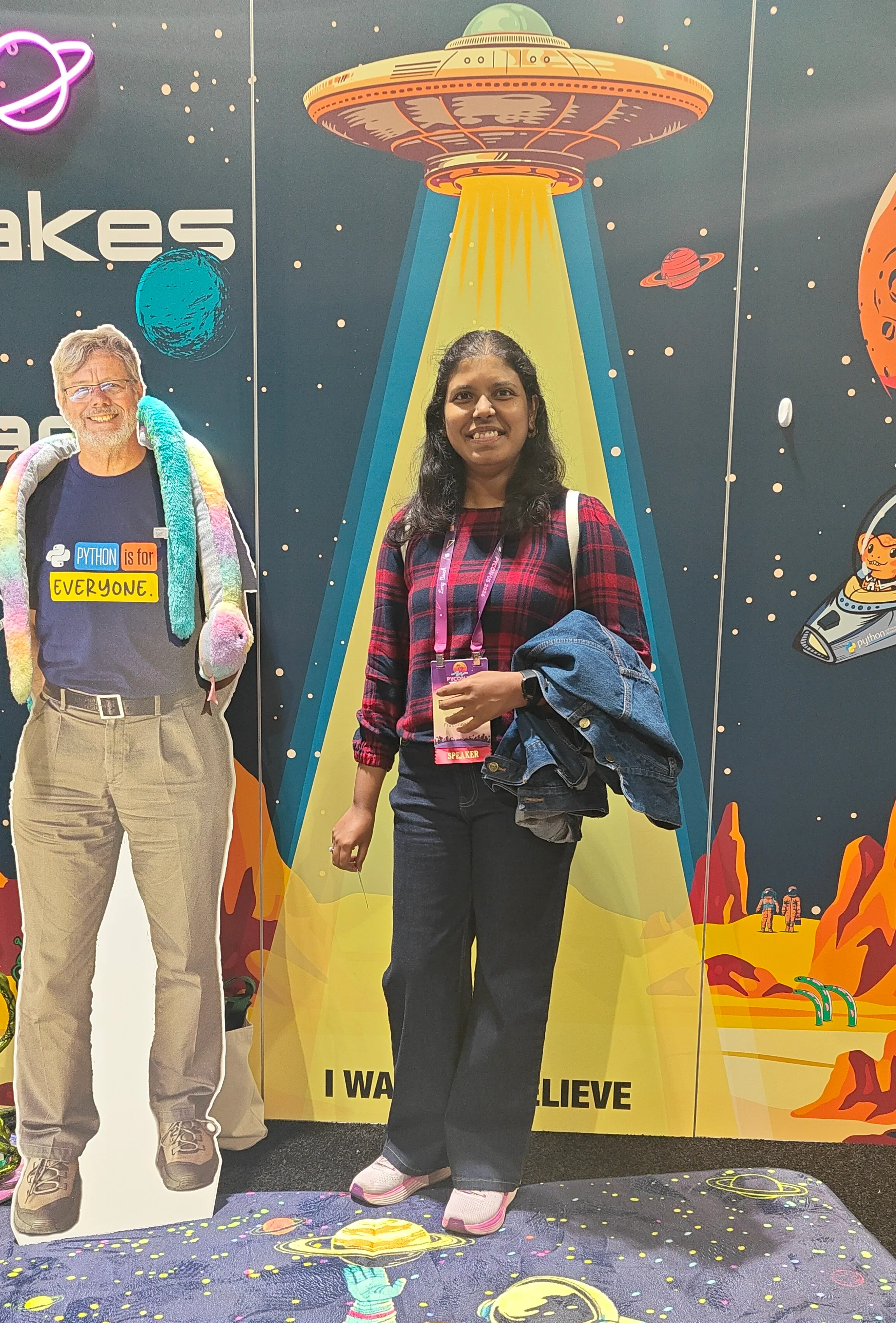
(Side note: I did meet Guido van Rossum, but that was at PyBay 2025, not here. He doesn’t do photos with people — gives five minutes at lunch instead. PyCon US had a standee.)
What I’m carrying home
The warmth and pride of successfully delivering the workshop at my dream conference. The bucket list item of meeting my heroes and making them my allies. Somewhere between the vipassana silence and the PyCon noise, I made a decision: stop treating teaching as a side thing. It’s not a side thing. It never was. I’ve announced the same Airflow workshop for my own community — if you want in, grab a spot here.
I’ve been thinking about this a lot — how to prepare workshops that actually land (more on that in a separate post), and how doing a yoga teacher training taught me more about pedagogy than any EdTech course ever did.
But the thread I keep coming back to is the one from my lightning talk. Curious people exist. They always will. They go one level deeper — past the tutorial, past the ChatGPT answer, into the why. And when they find someone who can meet them there, they want more of that. AI doesn’t kill that need. If anything, it intensifies it. The surface answers are everywhere now. The people who can go deeper are more valuable, not less.